
How much does it cost to fix damp in an old house? The honest answer is: it depends entirely on the cause. And that is the most important thing buyers of older properties need to understand — because treating the wrong type of damp is expensive and ineffective.
Types of Damp in UK Houses & Cost to Fix
The three main forms of damp affecting older UK properties are:
- Rising Damp: Ground moisture travelling upward through walls — £1,500–£18,000 to treat depending on extent
- Penetrating Damp: External water entering through the building fabric — £500–£4,000 for source repair
- Condensation: Warm moist air meeting cold surfaces — £500–£3,000 for ventilation and heating improvements
Rising damp
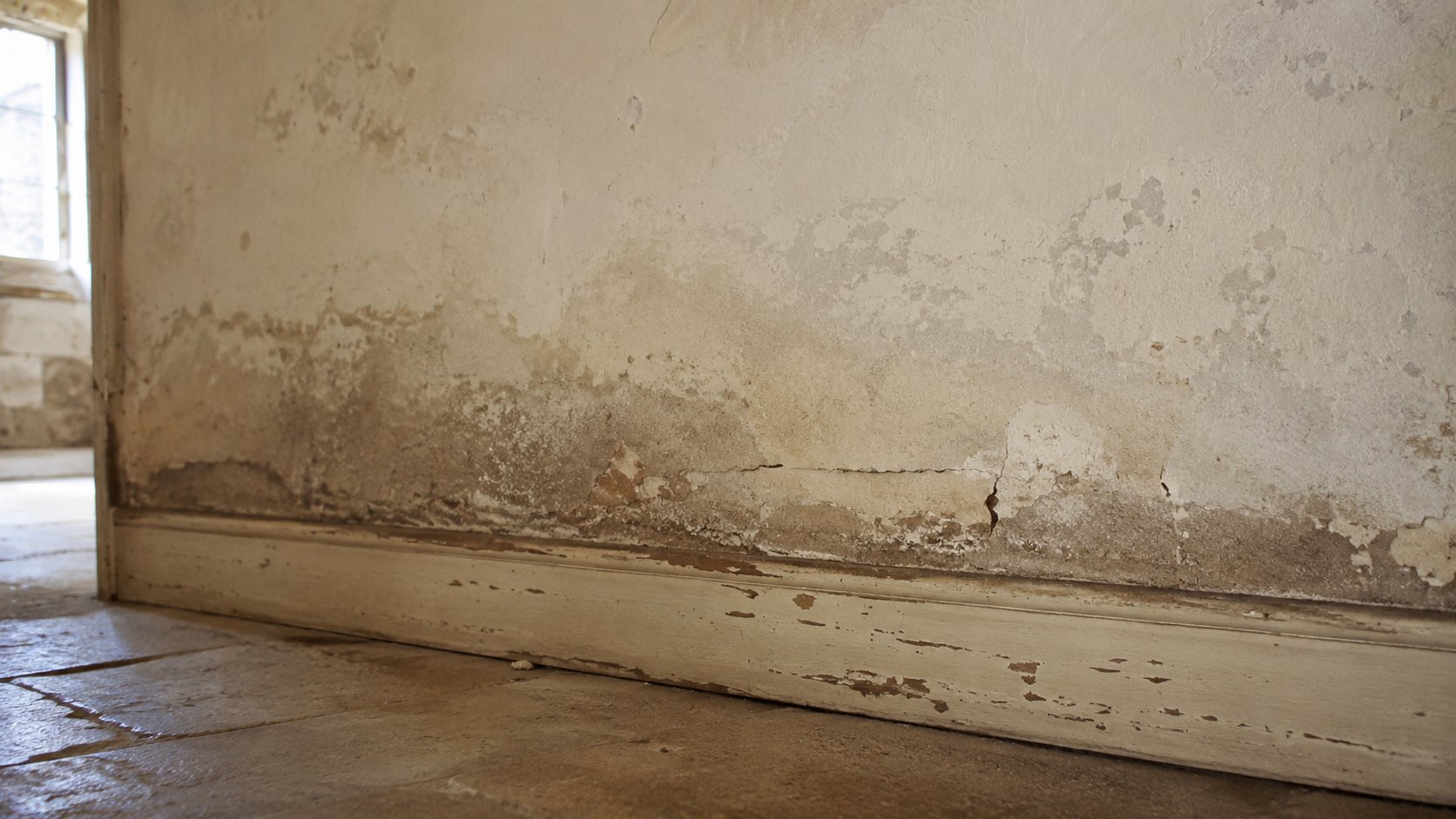
Ground moisture travelling upward through the base of walls. Typically visible as a tide mark on internal walls within 1 metre of the floor. Genuine rising damp requires installation of a new damp proof course, removal and replacement of contaminated plaster (which often overlaps with period property renovation costs), and redecorating. On a single wall, this costs £1,500–£4,000. A whole ground floor perimeter can cost £10,000–£18,000.
Penetrating damp
Water entering through the building fabric from outside — failed pointing, cracked render, damaged flashings, defective window sills, or leaking gutters. Treating the cause is often far cheaper than treating rising damp. Repointing, replacing failed flashings, or fixing a leaking gutter can resolve the issue for £500–£4,000. But if penetrating damp has been ongoing for years, internal damage may require significant additional work.
Condensation
The most common cause of damp in older properties — and the most frequently misdiagnosed as rising or penetrating damp. Treating condensation does not require damp proofing. It requires improved ventilation, better heating, and sometimes secondary glazing or insulation. The cost is typically £500–£3,000.
The most expensive mistake: Having a damp proofing company diagnose your damp is like asking a plumber what is wrong with your car. They will almost always recommend chemical injection damp proofing — regardless of whether that is the correct solution. Independent assessment of the cause before any treatment is commissioned is essential.
What does damp remediation realistically cost?
- Condensation — ventilation improvement: £500–£2,000
- Penetrating damp — source repair: £800–£4,000
- Penetrating damp — internal damage repair post-treatment: £2,000–£8,000
- Rising damp — single wall treatment and replaster: £1,500–£4,000
- Rising damp — full ground floor perimeter: £10,000–£18,000
Why does damp assessment matter so much before purchase?
A building survey might note "evidence of dampness" and recommend further investigation. What it will not tell you is whether you are looking at a £500 ventilation fix or a £15,000 damp proofing and replastering exercise. That difference is determinable before you make an offer — if you have the right experience examining the property.
What should I look for at viewings?
- Tide marks on internal walls at low level
- Bubbling, flaking, or stained paint and plaster
- A musty smell — particularly in cold, poorly ventilated rooms
- Condensation on windows and cold surfaces
- External pointing in poor condition or absent
- Ground level higher than the damp proof course on external walls
- Recent fresh plaster or new decoration in an otherwise unrenovated property
Every renovation job, every range — and why the cheapest quote is usually the most expensive.
Know what the damp means for your budget.
NOROS Assessments assesses damp cause and provides realistic remediation cost estimates as part of every site visit. Construction experience, not guesswork. From £250 for a full site visit.
Get in Touch