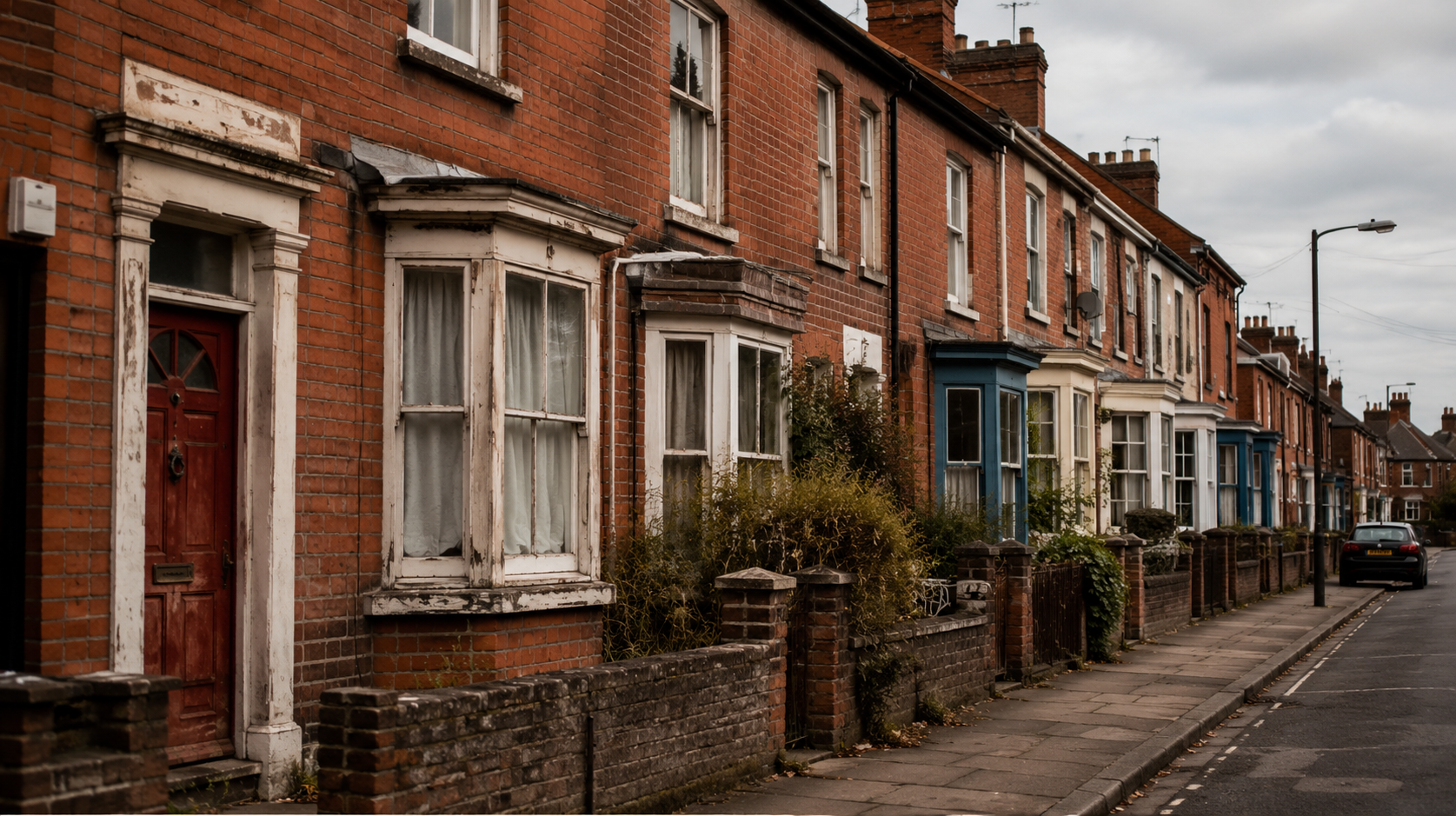

Victorian terraced houses make up a significant proportion of the UK housing stock — and a disproportionate share of the renovation market. Built between roughly 1837 and 1901, they are everywhere: two-up two-down workers' terraces in northern mill towns, double-fronted bay window terraces in London suburbs, and solid stone terraces in market towns across the Midlands and Cotswolds.
They are also consistently underestimated by buyers. The asking price reflects the discount for "needing work." What it doesn't reflect is what that work will actually cost. This guide gives you real 2026 contractor-level numbers — not website calculator estimates, not 2019 data — based on what projects of this type actually cost to deliver.
What does it cost to renovate a Victorian terrace in the UK in 2026?
The honest answer is: it depends entirely on what you're doing and what you're starting with. But here are the realistic ranges based on scope:
| Renovation Scope | Typical Cost Range (2026) | What's Included |
|---|---|---|
| Cosmetic refresh | £15,000–£35,000 | Decoration, flooring, kitchen update, bathroom update — no structural or services work |
| Light renovation | £35,000–£75,000 | New kitchen, new bathroom, rewire, new boiler, decoration, flooring |
| Full renovation | £75,000–£140,000 | All of the above plus roof repairs, damp treatment, replastering, new windows |
| Structural renovation | £120,000–£200,000+ | Full structural work, rear extension or loft conversion, complete internal fit-out |
These figures are for a typical two or three-bedroom Victorian terrace of around 75–110 square metres in England. Costs in London and the South East run 20–35% higher. Costs in the Cotswolds run 10–20% higher than national averages due to listed building requirements, conservation area restrictions, and the premium on local tradespeople.
The most important number: buyers consistently underestimate Victorian terrace renovation costs by 30–50%. The properties that look like they "just need a kitchen and bathroom" almost always need a rewire, a new boiler, damp treatment and replastering too — once you start looking properly.
What are the most expensive parts of renovating a Victorian terrace?
Electrical rewire
Victorian properties were built long before modern electrical standards. Most will have been updated at some point, but partial rewires, DIY additions, and ageing systems are extremely common. A full rewire of a two-bedroom Victorian terrace costs £8,000–£14,000. A three-bedroom property will be £11,000–£18,000. This includes first and second fix, new consumer unit, all new sockets and switches, and certification — but not the making-good (replastering chased channels), which adds a further £2,000–£5,000. See our full guide to rewiring costs for a complete breakdown.
Central heating and plumbing
If the property has no central heating, or a system over 15–20 years old, budget for full replacement. A new gas combi boiler with radiators throughout a two-bedroom terrace costs £6,000–£10,000. A three-bedroom property will be £8,000–£14,000. If you're replacing pipework as well — common in older Victorian properties still on lead or iron supply pipes — add £3,000–£8,000.
Roof repairs or replacement
Victorian roofs were built to last — but they weren't built to last 150 years without attention. Ridge tiles, valley lead, chimney pointing and flashings all deteriorate. A full roof replacement on a standard Victorian terrace costs £8,000–£20,000 depending on pitch, materials and access. Partial repairs — new valley lead, ridge repointing, tile replacement — start from £2,000 and can reach £8,000 before you're done. Get a roofer up before you offer, or factor a contingency.
Damp treatment and replastering
Rising damp, penetrating damp and condensation are endemic in Victorian properties. The solution depends entirely on the cause — see our detailed guide to damp costs. For a whole-house damp course and replastering of affected rooms, budget £8,000–£20,000. This is one of the most variable costs — a single affected room might be £2,500; a whole ground floor with failed drainage £18,000+.
Kitchen
A functional new kitchen in a Victorian terrace — mid-range units, integrated appliances, solid worktop, tiled splashback — costs £8,000–£18,000 fitted. A bespoke or high-end kitchen starts from £20,000 and can reach £50,000+ in larger rear-extension kitchens. If the kitchen footprint is being extended or moved, add structural costs on top.
Bathroom
A new family bathroom — full strip out and refit, tiled walls and floor, new sanitaryware, new shower — costs £5,000–£12,000. An en-suite in a smaller bedroom runs £4,000–£8,000. These figures include labour and materials but assume no structural alterations.
Windows
Original sash windows are common in Victorian terraces and are considered a character feature — particularly in conservation areas where replacements must match the original style. Restoring original sash windows costs £400–£800 per window. Replacing with new timber sashes costs £800–£1,800 per window. A whole-house replacement programme on a three-bedroom terrace typically runs £12,000–£22,000 in timber. uPVC is cheaper but may not be permitted in conservation areas or listed buildings.
Room by room: Victorian terrace renovation cost breakdown
| Element | Budget Range | Mid Range | High/Bespoke |
|---|---|---|---|
| Full rewire (2-bed) | £8,000 | £11,000 | £16,000+ |
| New central heating (2-bed) | £6,000 | £9,000 | £14,000+ |
| Roof repairs / replacement | £3,000 | £11,000 | £22,000+ |
| Damp treatment + replaster | £3,500 | £10,000 | £22,000+ |
| Kitchen (fitted) | £8,000 | £14,000 | £35,000+ |
| Bathroom (full refit) | £5,000 | £8,000 | £15,000+ |
| Windows (whole house, timber) | £10,000 | £16,000 | £28,000+ |
| Flooring (whole house) | £4,000 | £9,000 | £20,000+ |
| Full internal decoration | £4,000 | £7,000 | £14,000+ |
| External repointing | £3,500 | £6,000 | £12,000+ |
Every renovation job, every range — and why the cheapest quote is usually the most expensive.
Know the numbers before you offer.
A NOROS Desktop Assessment gives you a realistic renovation cost breakdown for a Victorian terrace — from listing photos alone, within 24 hours. £99 for a standard property. Used by buyers to negotiate, set auction ceilings, and decide whether a property stacks up.
Get a Cost Check — £99What hidden costs do Victorian terraces typically have?
Beyond the obvious scope, Victorian properties consistently produce costs that buyers don't anticipate. These are the ones that blow budgets and stall projects:
Lead water supply pipes
Properties built before the 1970s may still have lead supply pipes from the main to the property. These should be replaced — lead is a health risk and mortgage lenders increasingly flag it. Replacement costs £1,500–£4,000 depending on depth, access and distance from the boundary.
Asbestos
Properties built or significantly refurbished between the 1950s and 1980s may contain asbestos in artex ceilings, floor tiles, roof felt, soffit boards or pipe lagging. A Type 2 asbestos survey costs £250–£500. Removal, if required, costs £500–£8,000+ depending on extent and type.
Chimney stacks
Victorian terraces typically have one or more chimney stacks. Unused flues that have been blocked but not properly capped cause damp. Repointing a full chimney stack from scaffold costs £1,500–£4,000. If the stack is structurally compromised, removal and rebuilding starts from £3,000.
Floor joist repairs
Ground floor timber joists in Victorian properties are frequently affected by rot and woodworm, particularly where sub-floor ventilation has been blocked by raised external ground levels. Replacing ground floor joists across a full terrace costs £4,000–£12,000 depending on extent — and that's before the flooring goes back.
Party wall matters
Any structural work within 3–6 metres of a party wall requires a Party Wall Agreement. Surveyor fees for this run £700–£2,000 per neighbour, and you pay your neighbour's costs too. Budget for this if you're planning rear extensions, loft conversions, or underpinning.
The 20% rule: Whatever your visible renovation scope totals, add 20% as a contingency for Victorian properties. In our experience, unexpected work once walls and floors are opened up is the rule, not the exception. Properties that haven't been touched for 30+ years almost always produce surprises.
Is it worth buying a Victorian terrace that needs full renovation?
The calculation is straightforward — the execution is where buyers come unstuck. The fundamental question is: purchase price + full renovation cost < end value of a renovated equivalent in the same street?
If that equation works with a sensible margin — typically 15–20% of end value — the project can make financial sense. The problem is that most buyers don't know what the renovation will actually cost when they're making their offer. They estimate. They hope. They buy — and then discover the real number.
A pre-purchase renovation cost assessment closes that gap. It gives you the real numbers before you commit to anything — so you can make an offer that reflects actual cost, not optimism. See how buyers use assessments to negotiate on property price.
Victorian terrace renovation: frequently asked questions
How long does it take to renovate a Victorian terrace?
A light cosmetic renovation takes 6–12 weeks with a reliable contractor. A full renovation — rewire, plumbing, damp, kitchen, bathroom, decoration — typically takes 4–6 months. A structural renovation involving extensions or loft conversions will be 6–12 months from planning to completion. Victorian properties frequently produce additional scope once opened up, so build programme contingency in from the start.
Do I need planning permission to renovate a Victorian terrace?
Internal renovation work generally doesn't require planning permission. External work — extensions, loft conversions, changes to windows and doors, roof alterations — may require planning consent, particularly if the property is in a conservation area or is listed. Conservation area consent is required for any demolition of a wall or gate facing a highway. Always check with the local planning authority before starting external works.
Can I extend a Victorian terrace?
Yes — rear extensions are common on Victorian terraces and often fall within permitted development rights (single-storey up to 4m depth for detached, 3m for semi or terrace, subject to conditions). Double-storey rear extensions and side extensions require planning permission. Loft conversions using a rear dormer typically fall within permitted development on terraces. A structural engineer is required for any extension and for loft conversions. Budget £40,000–£90,000 for a typical single-storey rear extension including planning, structure, groundworks, shell and internal fit-out.
What should I check before buying a Victorian terrace that needs work?
Read our full viewing checklist for renovation properties. The most important things to assess before making an offer: roof condition, evidence of damp, electrical consumer unit age, boiler age and condition, window condition, chimney stacks, and any evidence of structural movement.
How do I get an accurate renovation cost for a specific Victorian terrace?
The ranges in this guide give you a working framework — but every property is different. A Victorian terrace in Cheltenham that hasn't been touched since 1985 has a different scope to one in Cirencester that was "renovated" 10 years ago with budget finishes that now need replacing.
The only way to get an accurate number for a specific property is to have someone with real building experience look at it properly — either from the listing (for a desktop cost check) or in person (for a full site visit assessment). That's what NOROS does. See a real assessment example before deciding.