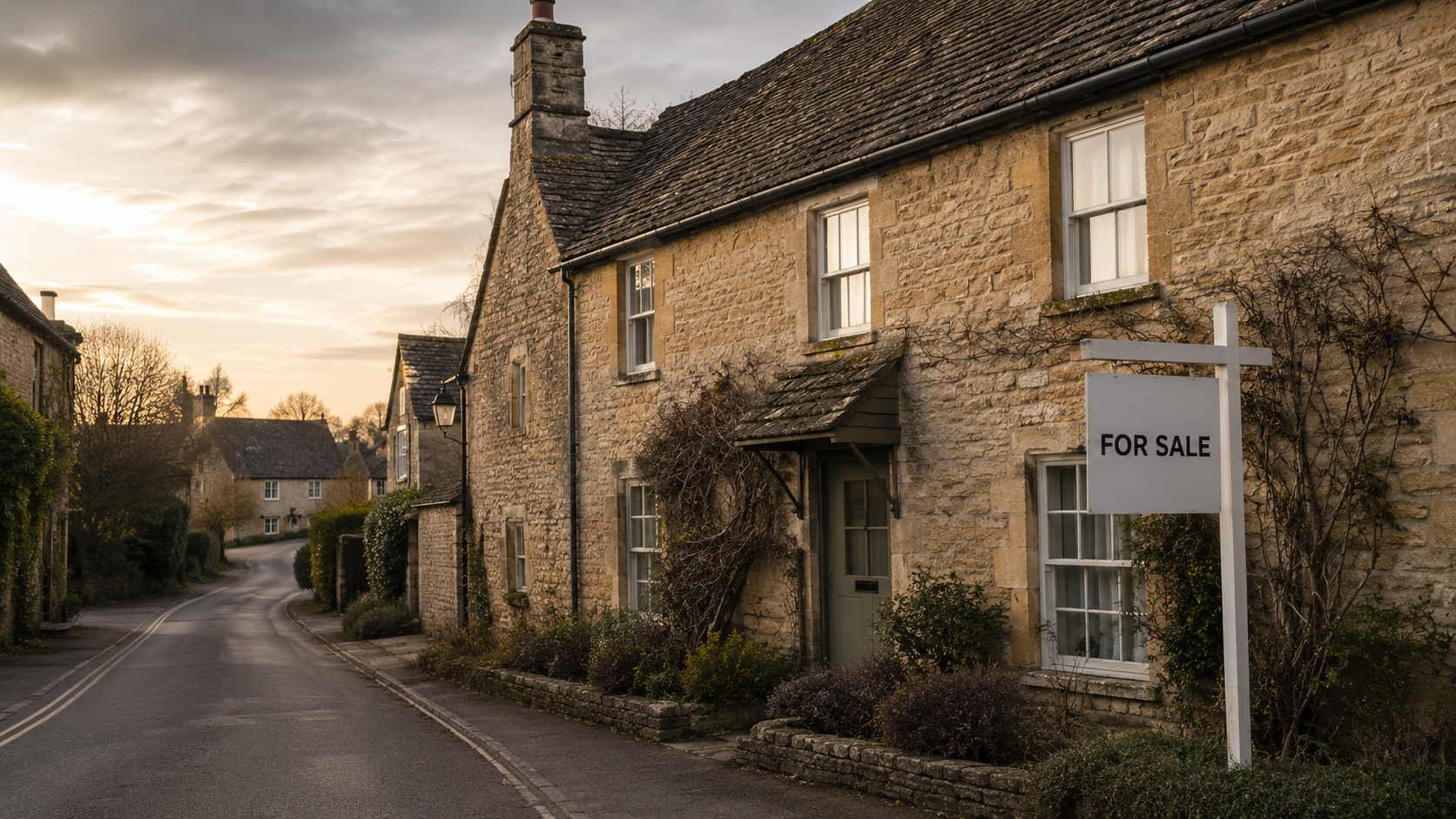

If you've renovated a house before, you probably learned which small jobs don't need planning permission — new windows, a re-covered roof, a rebuilt garden wall. In most of England, that knowledge travels with you to the next property. In large parts of the Cotswolds, it doesn't. An Article 4 Direction can quietly remove exactly those rights, and it's one of the easiest things for a buyer to miss until it's too late to matter.
What is an Article 4 Direction?
Most minor building work in the UK falls under what's called "permitted development" — a standing national grant of planning permission that means you don't need to apply for routine jobs like replacing windows or repairing a roof. An Article 4 Direction is the tool a local council uses to withdraw specific permitted development rights within a defined area. Where one is in place, work that would be automatic anywhere else suddenly needs a full planning application.
It's a separate control from being a Listed Building. Article 4 applies at area level — to a street, a village, or part of one — regardless of whether any individual property within it is listed. A perfectly ordinary, unlisted cottage can have fewer permitted development rights than a listed farmhouse two villages over, simply because of which side of a boundary line it sits on.
Why the Cotswolds is more exposed to this than most of the UK
Cotswold District Council alone has 144 separate conservation areas — the highest number of any district council in England. Article 4 Directions are frequently attached to these conservation areas, though not automatically or uniformly; the scope varies from parish to parish, and sometimes from street to street within the same village.
Where a direction is in place, the council's own guidance is specific about what it typically catches: planning permission is commonly required for replacing windows and doors, removing chimney stacks and boundary walls, and replacing roof materials — all jobs that would be permitted development almost anywhere else in the country.
The practical trap: a buyer who's replaced windows or re-roofed a house before, without ever needing to ask the council, reasonably assumes the same applies here. In an Article 4 area, several of those same jobs need a full application — with the time, cost and uncertainty that comes with it.
Article 4 vs Listed Building Consent — not the same thing
It's worth being clear about the difference, because the two get conflated constantly. Listed Building Consent applies to a specific building that's on the National Heritage List, and covers virtually every alteration to it, inside and out. An Article 4 Direction applies to an area, regardless of listing status, and removes specific permitted development rights rather than requiring consent for everything.
A property can be subject to either, both, or neither. If you're buying an older property in a Cotswold village, it's worth checking both separately — assuming one tells you about the other is exactly the kind of gap buyers fall into.
How to actually check before you offer
- Check the relevant council's conservation area and Article 4 map for the exact address — not just the village. Cotswold District Council publishes its Article 3 and 4 Directions online; West Oxfordshire, Stroud, Cheltenham, and Wiltshire Council each maintain their own separate records for their areas
- Ask the agent or the vendor's solicitor to confirm the position as part of pre-contract enquiries — this is a standard, reasonable question to raise before you commit
- If you already have specific work in mind, apply for a Lawful Development Certificate before you rely on being able to do it — it puts the council's answer in writing rather than leaving it to assumption
- Don't extrapolate from the village name or a neighbour's experience — Article 4 boundaries can run down one side of a lane and not the other
What it means for your renovation budget
This isn't only a question of whether you're allowed to do the work — it changes what the work costs once you are. Where a council requires sympathetic materials in place of standard modern ones, the price difference is real: timber or heritage-style windows in conservation and listed work typically run two to three times the cost of equivalent uPVC. Natural stone or slate re-roofing, common across the Cotswolds, costs significantly more than a standard concrete tile job — and that's before scaffolding, which usually lands before a single tile is touched.
None of that makes a property a bad buy. It does mean the number you budget for "new windows" or "re-roof" needs to reflect what the council will actually accept, not the national average you might be pricing from memory.
The bottom line for Cotswold buyers
Don't assume the rules that applied to your last house apply here. Whatever "obvious" work you're planning — windows, roof, boundary walls, even removing a chimney stack — check the specific address before you offer, not after you've exchanged. It's exactly the kind of constraint that's easy to miss on a viewing and expensive to discover afterwards.
A NOROS assessment looks at exactly this kind of thing alongside the cost breakdown — flagging where planning constraints are likely to affect what you can do and what it will cost, before you've committed to the purchase.
Frequently asked questions
Does every Cotswolds village have an Article 4 Direction?
No. They're applied parish by parish, and sometimes street by street, not across the Cotswolds as a whole. With 144 conservation areas in Cotswold District alone, and not all of them carrying a direction, you have to check the specific property rather than relying on the village's reputation.
Do I need to worry about this if the property isn't listed?
Yes. An Article 4 Direction applies to a defined area and has nothing to do with whether an individual building is listed. An unlisted cottage inside an Article 4 area can have fewer permitted development rights than a listed building outside one.
What happens if previous work was done without permission?
The council can take enforcement action, which in some cases means requiring the owner to reinstate the original feature at their own cost. If a property you're viewing has obviously new windows, a re-covered roof, or a rebuilt boundary wall and it sits in an Article 4 area, it's worth asking when the work was done and whether permission was obtained before you rely on it being lawful.
How much does a Lawful Development Certificate cost?
In England, it costs £120 as of May 2026. It's a small cost for a firm written answer from the council on whether a specific piece of work needs planning permission — far cheaper than finding out after you've already committed to the works.
Every renovation job, every range — including what heritage windows and natural stone roofing really cost.
Buying a property in an Article 4 area?
NOROS Assessments provides independent pre-purchase renovation cost assessments across Gloucestershire, Wiltshire and Oxfordshire — flagging planning constraints alongside realistic costs, before you commit.
Get in Touch