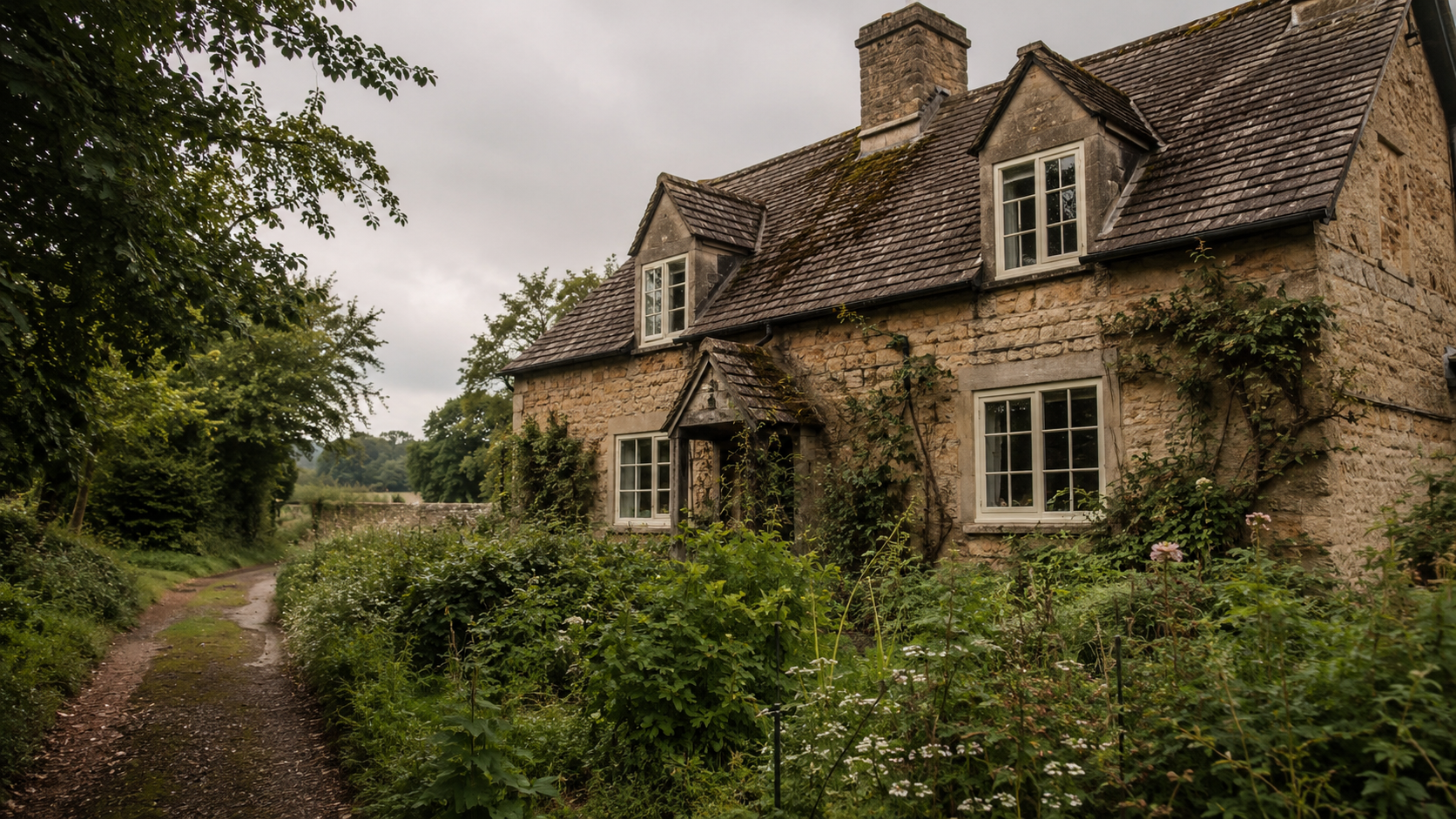

The dream of owning a cottage is common. The reality of renovating one is something else. Cottages — stone, brick or flint; thatched or slated; rural or village — share a set of characteristics that make them consistently more expensive to renovate than equivalent modern properties. Small rooms, solid walls, low ceilings, restricted access, damp, and in many cases listed building status: all of these add cost.
This guide covers what cottage renovation actually costs in the UK in 2026. Not the optimistic estimate. The real number — from someone who has priced and managed projects of this type across the Cotswolds and surrounding counties.
How much does it cost to renovate a cottage in the UK?
The honest range, depending on size and scope:
| Renovation Scope | Small Cottage (1–2 bed) | Larger Cottage (3–4 bed) |
|---|---|---|
| Cosmetic refresh only | £15,000–£35,000 | £25,000–£55,000 |
| Light renovation | £35,000–£70,000 | £55,000–£100,000 |
| Full renovation | £65,000–£120,000 | £100,000–£180,000 |
| Full renovation — listed building | £90,000–£160,000 | £140,000–£260,000+ |
| Full renovation + extension | £120,000–£200,000 | £175,000–£320,000+ |
These figures are for cottages in England. Cotswolds properties run 15–25% above these ranges — see our dedicated Cotswolds renovation cost guide for local pricing.
Why cottages cost more than the calculator says: online renovation calculators use national averages from modern properties. Cottages are not modern properties. Solid wall construction, lime mortars, specialist access, and rural logistics all add cost that no calculator accounts for. The only reliable figure is one based on the specific property.
Why do cottages cost more to renovate?
Solid wall construction
Most pre-1920 cottages have solid stone or brick walls rather than the cavity walls found in modern properties. Solid walls cannot use modern cement-based renders and plasters without causing long-term damage — the wall needs to breathe, and cement traps moisture inside. Lime-based mortars, renders and plasters are essential and significantly more expensive. A lime plaster finish costs £40–£80 per square metre versus £15–£30 for standard gypsum.
Damp is almost universal
Solid wall cottages manage moisture through breathability — the wall absorbs and releases moisture naturally. This system is disrupted by any cement-based work, blocked air bricks, raised external ground levels, or impervious floor coverings. The result is damp — and it's endemic in older cottages. Before any renovation work begins, damp must be investigated and its cause understood. See our guide to damp costs.
Low ceilings and small rooms
Cottage rooms are typically small and ceilings are low — often 2.1–2.3 metres. This makes working conditions difficult for trades and slows everything down. A plasterer who can finish 40 square metres of wall in a day in a standard room may only manage 25 in a cottage with exposed beams, irregular walls and poor access. The labour cost per square metre is higher as a result.
Rural access and logistics
Many cottages are accessed by narrow lanes, have no parking for vans, limited skip access, and no local builders' merchant within reasonable distance. Material deliveries cost more. Skip collections take longer to arrange. Trades spend more time travelling. These factors add a measurable premium to any rural cottage renovation.
Beams and structural timbers
Exposed oak or elm beams are part of the appeal of a cottage. They are also frequently affected by woodworm, rot, or structural compromise after centuries of use. Treatment or replacement of structural timbers is specialist work. Beam replacement costs £500–£2,500 per beam depending on size and access. A structural survey of the roof void and floor structure is essential before budgeting a cottage renovation.
What does a full cottage renovation include — and cost?
Damp investigation and treatment
The starting point for any solid-wall cottage renovation. Before walls are replastered, the cause of any damp must be identified and resolved. This may involve:
- Clearing blocked sub-floor ventilation: £300–£1,200
- Lowering external ground levels: £500–£3,000
- Renewing failed drainage: £1,500–£8,000
- Repointing external walls: £8,000–£20,000
- Full lime replaster after treatment: £6,000–£18,000
Rewire
Older cottages frequently have outdated electrical systems. A full rewire in a cottage is more complex than in a standard property — solid walls mean cables must be surface-run or carefully chased, and beamed ceilings make routing difficult.
- 2-bed cottage: £9,000–£16,000
- 3-bed cottage: £13,000–£22,000
See our full rewiring cost guide.
Central heating
Many older cottages have oil-fired or solid fuel heating systems rather than gas — rural locations often have no mains gas supply. Oil boiler replacement: £3,000–£6,000. If converting to an air source heat pump (increasingly relevant for off-gas properties): £8,000–£18,000 installed. New radiators throughout: £3,000–£7,000 depending on property size.
Roof
Cottage roofs vary enormously by material and age:
- Thatched roof — full re-thatch: £15,000–£30,000 (water reed); £10,000–£20,000 (long straw)
- Natural slate re-roof: £12,000–£25,000
- Cotswold stone slate re-roof: £35,000–£65,000
- Clay plain tile re-roof: £10,000–£20,000
- Roof repairs (partial): £1,500–£8,000
Kitchen
Cottage kitchens are often small and require a sympathetic approach — bespoke or handmade units in keeping with the character of the building rather than standard flat-pack. Mid-range fitted kitchen in a cottage: £10,000–£22,000. Bespoke in-frame or handmade units: £20,000–£50,000+.
Bathroom
As with the kitchen, a cottage bathroom often benefits from a traditional approach — freestanding baths, exposed pipework, period sanitaryware. A well-specified cottage bathroom costs £8,000–£18,000. A simple functional refit: £5,000–£9,000.
Windows and doors
Original cottage windows — small casements, leaded lights, timber sashes — are part of the character of the building and are almost always restricted by listing or conservation area status. Restoration of original timber casement windows: £300–£600 per window. Replacement with new timber double-glazed units: £700–£1,800 per window. Replacing a cottage front door with a period-appropriate hardwood door: £1,500–£4,500 fitted.
Every renovation job, every range — and why the cheapest quote is usually the most expensive.
Know the real cost before you offer on a cottage.
NOROS Desktop Assessments provide realistic renovation cost estimates for UK cottages — from listing photos alone, within 24 hours. We understand solid wall construction, lime systems, rural logistics and listed building constraints. £99 for a standard property.
Get a Cottage Cost CheckThe hidden costs specific to cottage renovation
Septic tanks and private drainage
Rural cottages frequently have private drainage — septic tanks, cesspools, or treatment plants rather than mains sewer. An ageing or non-compliant septic tank must be replaced or upgraded. A new septic tank installation costs £3,000–£8,000. A sewage treatment plant (required in environmentally sensitive areas) costs £5,000–£15,000 installed. Mains drainage connection, where available, costs £2,000–£10,000 depending on distance.
Oil tank replacement
An oil-fired cottage with an ageing tank needs it replaced before any renovation work begins. A new bunded plastic oil tank installed costs £1,200–£2,500.
Well and private water supply
Some isolated cottages have a private water supply — a well or borehole. These require regular testing and may need filtration systems. If connecting to mains water is possible, budget £3,000–£12,000 depending on distance from the mains.
Bat surveys and protected species
Rural cottages — particularly those with roof voids, outbuildings, or mature trees — frequently have bat roosts. A preliminary roost assessment (PRA) costs £250–£500. If bats are confirmed, full survey and licence costs can reach £2,000–£5,000 and significantly delay roof or loft works.
The 25% rule for cottages
For standard properties, a 20% contingency is recommended. For cottages — particularly older ones that haven't been opened up in decades — use 25%. Solid walls, earthen floors, random rubble construction and centuries of improvised repairs consistently produce surprises that add cost. Build it in from the start.
Is it worth buying a cottage that needs renovation?
In the right location, consistently yes. Well-renovated cottages in desirable rural areas — the Cotswolds, the Chilterns, the Yorkshire Dales, the Wiltshire downland — command end values that reward the investment. But the renovation cost must be known before you offer, not discovered after you've committed.
The most common reason cottage renovation projects go wrong is that buyers estimated the cost at viewing rather than assessed it properly. A property that looks like it needs £60,000 of work frequently needs £120,000. The difference between those two numbers is the difference between a profitable project and a very expensive mistake.
Read our guide on how to work out what to offer on a house that needs work, and see how buyers use renovation assessments to negotiate on price.
Or see a real NOROS assessment example before deciding whether to get one.