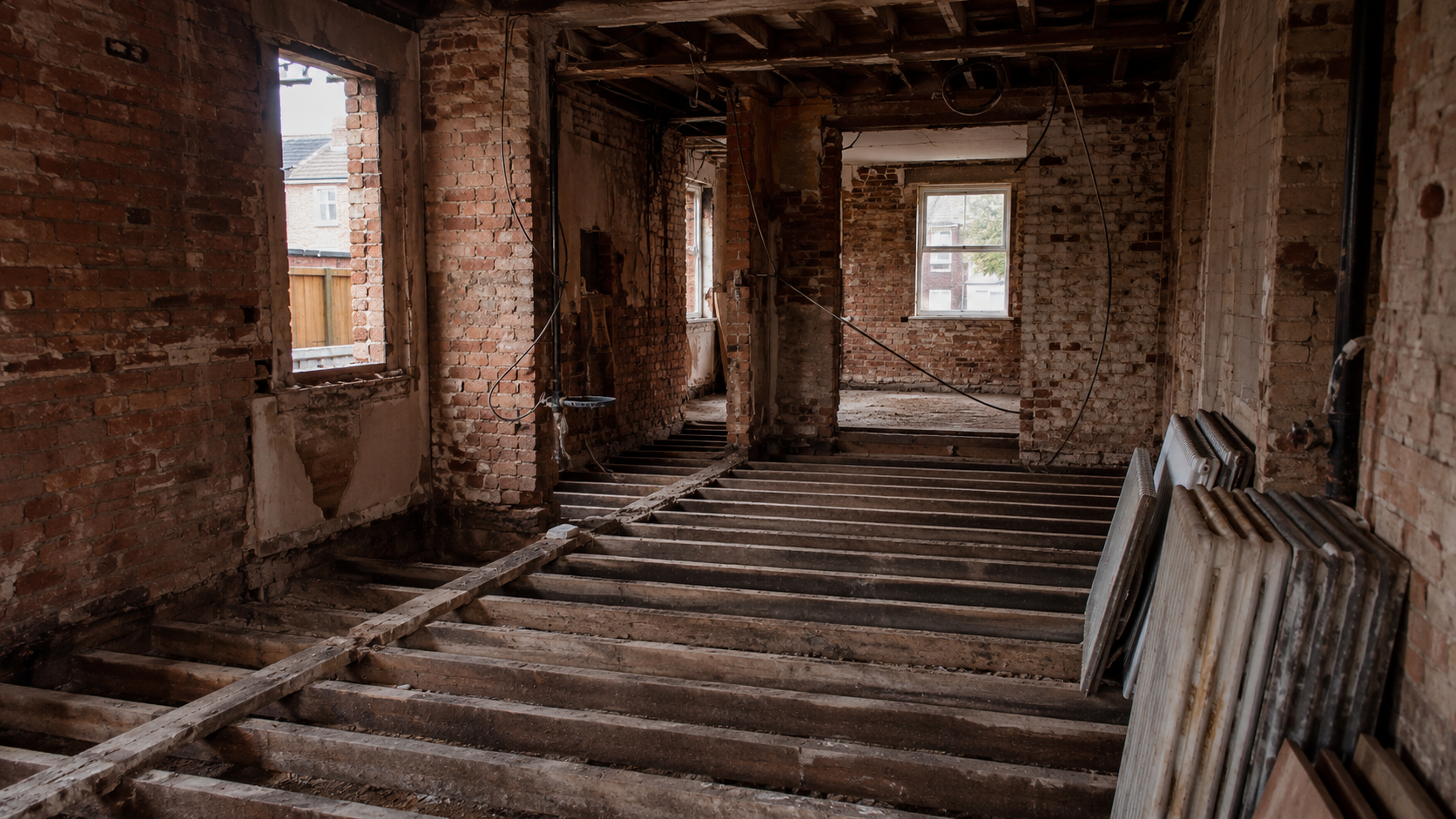

A full house renovation is one of the biggest financial commitments most people will ever make. Yet the majority of buyers who take on renovation projects go into them without a clear picture of what everything will cost. They have a budget in mind — often based on a figure they read online or a number that feels manageable — and they discover the reality after they've exchanged contracts.
This guide gives you the real numbers. Not estimates from a cost calculator. Not figures from 2021. Realistic 2026 contractor-level pricing for a full renovation in England, broken down room by room and trade by trade — with the hidden costs that most guides leave out.
How much does a full house renovation cost in the UK in 2026?
The total depends on three things: size of the property, its current condition, and the specification of finishes you want. Here are the realistic ranges:
| Property Size | Budget Spec | Mid-Range Spec | High/Bespoke Spec |
|---|---|---|---|
| 1-bed flat / studio | £25,000–£45,000 | £40,000–£70,000 | £65,000–£120,000 |
| 2-bed terraced | £45,000–£75,000 | £70,000–£110,000 | £100,000–£180,000 |
| 3-bed semi / terraced | £60,000–£95,000 | £90,000–£145,000 | £130,000–£220,000 |
| 4-bed detached | £85,000–£130,000 | £125,000–£190,000 | £175,000–£300,000+ |
| Period / listed property | Add 25–45% | Add 25–45% | Add 25–45% |
What "full renovation" means in this guide: new kitchen, new bathroom(s), full rewire, new central heating, all new flooring and decoration, windows where needed, and any structural or defect remediation required. This is a whole-house transformation — not a cosmetic refresh.
The big six — the trades that drive the cost of any full renovation
Before you look at rooms, understand the trades. These six elements account for the majority of spend on any full renovation — and they all need to happen before the decorative finishes go in.
1. Electrical rewire
Any property that hasn't had a full rewire in the last 25–30 years should be considered for rewiring during a full renovation. Rewiring is disruptive and expensive to retrofit — far better done when the property is stripped back. A full rewire including new consumer unit, all new cabling, sockets, switches and certification costs:
- 2-bed property: £8,000–£14,000
- 3-bed property: £11,000–£18,000
- 4-bed property: £14,000–£24,000
This does not include making good (replastering chased channels) — add £2,000–£6,000. See our full guide to rewiring costs.
2. Central heating and plumbing
A new gas combi boiler with full radiator replacement and new pipework throughout:
- 2-bed property: £6,000–£10,000
- 3-bed property: £8,000–£14,000
- 4-bed property: £11,000–£18,000
If the property has lead water supply pipes, replace them: add £1,500–£4,000. If you're installing underfloor heating in the kitchen or bathrooms, add £80–£150 per square metre for electric systems, or £120–£200 per square metre for wet underfloor heating.
3. Damp treatment
Any property over 50 years old should be assessed for damp before replastering begins. Treating damp after replastering is significantly more expensive than treating it first. Depending on cause and extent:
- Rising damp (chemical DPC) — single room: £800–£2,500
- Rising damp — whole ground floor: £4,000–£10,000
- Penetrating damp remediation: £500–£5,000 depending on source
- Full damp investigation, treatment and replaster (whole house): £8,000–£25,000
Read our full guide to damp costs before budgeting.
4. Plastering
A full replaster is often required after rewiring, damp treatment, or if the existing plaster is in poor condition. Costs vary by room size and condition of existing substrate:
- Bedroom (standard): £600–£1,200
- Kitchen or living room: £800–£1,600
- Whole house replaster (3-bed): £5,000–£9,000
- Lime plaster (period/listed properties): add 50–80%
5. Roof
A full renovation is the right time to deal with any roof issues — before the internal work goes in. Costs depend heavily on condition and materials:
- Partial repairs (valleys, ridge, flashings): £1,500–£6,000
- Full re-roof — concrete tiles (3-bed semi): £8,000–£16,000
- Full re-roof — natural slate: £14,000–£28,000
- Full re-roof — Cotswold stone slate: £35,000–£65,000
6. Windows
If the property has single-glazed or failing double-glazed windows, replace them during the renovation — scaffolding costs are shared and the property is already disrupted. Costs per window installed:
- uPVC double-glazed: £400–£800
- Aluminium double-glazed: £600–£1,200
- Timber double-glazed: £800–£2,000
- Timber sash (period properties): £1,200–£2,500
Room by room: full renovation cost breakdown
Kitchen
The kitchen is typically the single most expensive room in a renovation. Costs depend enormously on size, layout changes, and specification:
| Kitchen Specification | Cost Range (supply and fit) |
|---|---|
| Budget (flat pack, basic appliances) | £6,000–£10,000 |
| Mid-range (rigid carcasses, integrated appliances) | £10,000–£20,000 |
| High spec (solid worktops, quality appliances) | £20,000–£40,000 |
| Bespoke / handleless / Shaker | £35,000–£80,000+ |
| Layout change (moving sink, removing wall) | Add £3,000–£15,000 |
| Rear extension kitchen (new structure) | Add £50,000–£110,000 |
Bathroom
A full strip out and refit of a standard family bathroom — new sanitaryware, tiled walls and floor, new shower, chrome fittings:
- Budget refit: £4,000–£7,000
- Mid-range refit: £7,000–£13,000
- High spec refit: £13,000–£25,000+
- En-suite (smaller room): £4,000–£10,000
- Adding a new bathroom (new room): add structural costs + £8,000–£18,000
Living room
Assuming new flooring, redecoration, and any fireplace restoration:
- Redecoration (walls, ceiling, woodwork): £800–£2,000
- New flooring (engineered oak, 20m²): £2,000–£5,000
- Fireplace restoration / new fireplace: £1,500–£8,000
- Chimney breast removal: £2,500–£6,000 (plus making good)
Bedrooms
Per bedroom, assuming redecoration and new flooring:
- Redecoration: £500–£1,200
- New carpet: £400–£900 per room
- Engineered wood flooring: £800–£2,000 per room
- Built-in wardrobes: £1,200–£4,500 per room
Structural works
Many full renovations involve structural changes. These are some of the most variable costs:
| Structural Work | Typical Cost Range |
|---|---|
| Remove internal wall (non-load-bearing) | £800–£2,000 |
| Remove load-bearing wall (with RSJ) | £2,500–£7,000 |
| Loft conversion (dormer, 3-bed house) | £45,000–£80,000 |
| Single-storey rear extension | £40,000–£90,000 |
| Double-storey rear extension | £70,000–£140,000 |
| Garage conversion | £15,000–£35,000 |
| Underpinning (per metre run) | £1,500–£3,500 |
Every renovation job, every range — and why the cheapest quote is usually the most expensive.
Get a realistic cost breakdown before you commit.
A NOROS Desktop Assessment gives you a clear renovation cost estimate for any UK property — from the listing alone, within 24 hours. Used by buyers to set budgets, make offers, and avoid expensive surprises. From £99.
Get a Cost Check — £99The costs most renovation budgets miss
Even experienced renovators regularly underestimate these:
Scaffolding
Any external work above ground level requires scaffolding. A full scaffold on a typical terrace or semi costs £1,500–£4,000 for erection, hire and dismantling. Plan scaffold to cover all external trades at once — re-erecting is expensive.
Skip hire and clearance
A full house clearance and renovation generates significant waste. Budget £3,000–£8,000 for skip hire, waste removal and clearance across a full renovation programme.
Structural engineer fees
Required for any load-bearing wall removal, extension, loft conversion or subsidence remediation. Fees run £500–£2,500 for calculations and drawings.
Party wall surveyor fees
If you're working within 3–6 metres of a party wall, you need a Party Wall Agreement. Budget £700–£2,000 per neighbour, and you pay their surveyor too.
Architect / project manager fees
For a managed renovation with design input: typically 8–15% of construction cost. On a £120,000 renovation that's £10,000–£18,000 — but can significantly increase the end value and reduce stress.
Contingency
This is the most important line in any renovation budget. Add 15–20% to your total as contingency before you start. On a Victorian or Edwardian property, use 20–25%. Unexpected work — hidden rot, failed drainage, structural issues — is not a question of if, but when.
How to build a renovation budget that holds
The reason renovation budgets fail is almost always one of three things: the initial scope was wrong, the contingency was too small, or unexpected structural or defect costs emerged after exchange. The only reliable defence against all three is getting a proper cost assessment before you commit to buying the property.
Read our guide to budgeting for a renovation before making an offer — and see the hidden costs of UK renovation that most buyers only discover after they've moved in.
If you're buying a property that needs work, a pre-purchase renovation cost assessment is the most valuable £99 you'll spend in the entire buying process. See a real assessment example before deciding.