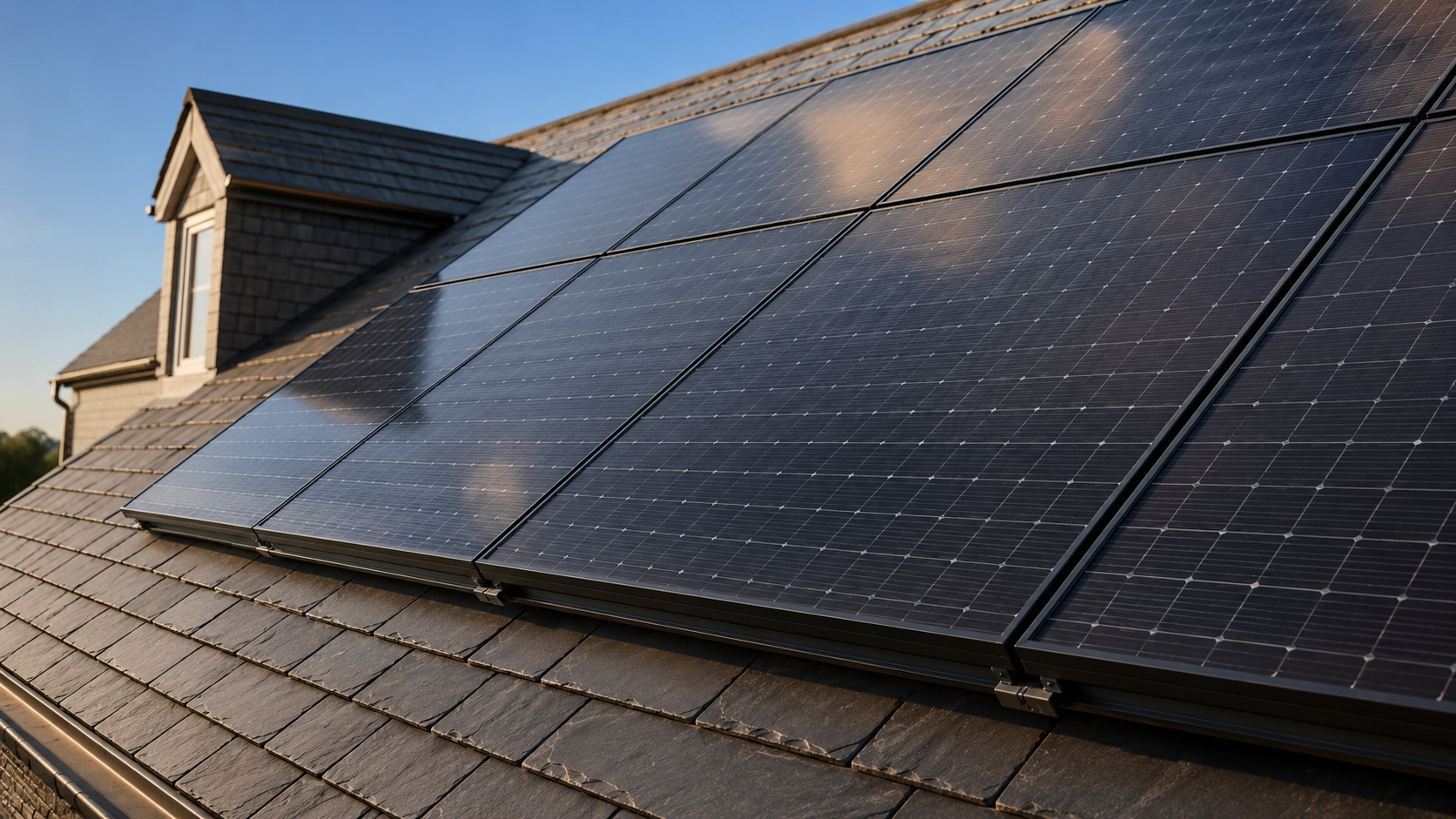

Solar panel interest has surged in the UK over the last two years, driven by high energy bills and a growing body of evidence that PV systems genuinely pay back. Whether you're a homeowner looking to install or a buyer weighing up a property that already has panels, the costs and considerations are quite different — and the figures you'll find online are often out of date or optimistic.
This is a contractor-level breakdown of what solar panel installation actually costs in the UK in 2026, what affects the price, and what buyers need to check before they rely on an existing system.
Solar Panel Installation Cost UK 2026
The most common domestic system size is 4kWp (kilowatt peak), which suits a 3–4 bedroom house with average energy use. Expect to pay:
| System Size | Typical Panels | Best For | Supply & Install Cost |
|---|---|---|---|
| 3kWp | 6–7 panels | 1–2 bed flat or small house | £4,500–£7,000 |
| 4kWp | 8–10 panels | 3–4 bed house | £6,000–£9,000 |
| 6kWp | 12–14 panels | Large house or high usage | £8,500–£13,000 |
| 10kWp | 20–24 panels | Very large home or EV charging | £14,000–£20,000 |
These are supply and installed figures from MCS-accredited installers. Be cautious of quotes significantly below this range — cheap panels and poor installation practices are common and affect both performance and insurance validity.
What drives the price up: Steep or complex roofs, scaffolding requirements, older roof coverings that need reinforcing, long cable runs to the consumer unit, and three-phase supply requirements can all add £500–£3,000 to the base cost.
Battery Storage: Is It Worth Adding?
A solar system without battery storage exports unused power to the grid at around 15p/kWh via the Smart Export Guarantee. With a battery, you store that power and use it in the evening — worth considerably more per unit.
| Battery Capacity | Typical Brand | Supply & Install Cost | Useful Life |
|---|---|---|---|
| 5–6 kWh | GivEnergy, SolarEdge | £3,000–£4,500 | 8–12 years |
| 9–10 kWh | Tesla Powerwall, Growatt | £5,000–£7,500 | 10–15 years |
| 13–15 kWh | Tesla Powerwall 3 | £8,000–£11,000 | 10–15 years |
Adding a battery at the same time as panels is always cheaper than retrofitting later — you share scaffolding costs and the installer only visits once. Retrofit battery installation typically adds £500–£1,000 to the battery cost alone.
What Affects Payback Period?
A well-sized 4kWp system on a south-facing roof with a household that uses energy during the day can pay back in 7–10 years. The variables that shift this significantly are:
- Roof orientation — south-facing is optimal. East/west-facing roofs produce roughly 15–20% less annually. North-facing roofs rarely make financial sense.
- Shading — nearby trees, chimneys, or dormer windows that cast shadows during peak hours can reduce output by 20–50%.
- Household usage pattern — systems pay back faster in homes where people use energy during the day (working from home, EV charging). Evening-heavy households need battery storage to benefit fully.
- Energy price trajectory — payback calculations done at higher electricity prices accelerate the return significantly.
What Buyers Need to Check Before Purchasing a Property with Solar
A property with solar panels is not automatically an asset. Before you rely on the system, check these points — ideally before you make an offer:
1. MCS Certificate and Registration
The system must have been installed by an MCS (Microgeneration Certification Scheme) accredited installer. Without this, you cannot access the Smart Export Guarantee, and some insurers will not cover the panels. Ask the vendor for the MCS certificate and the installation date.
2. Inverter Age and Condition
The inverter converts DC power from the panels to usable AC power. Inverters typically last 10–15 years and cost £800–£1,500 to replace. A system installed before 2012 almost certainly needs a new inverter imminently — factor this into your offer.
3. Roof Condition Beneath the Panels
Panels are typically warranted for 25 years, but if the roof covering beneath them needs replacing, the panels have to come off first — adding significant cost. If the property has an aging roof, get a roofer to assess it before or during the purchase process. A full house renovation cost assessment would catch this.
4. Feed-in Tariff Transfers
Properties with panels installed before April 2019 may still be receiving Feed-in Tariff payments. These can transfer to a new owner, but the process needs to be followed correctly during conveyancing. Your solicitor should handle this, but confirm it is on their radar.
5. Listed Buildings and Conservation Areas
If you're buying a listed building or a property in a conservation area, panels installed without listed building consent or planning permission may be unlawful. This can be a serious issue — confirm planning status with the local authority before exchanging.
Buyer's rule of thumb: A solar system installed in the last 5 years with MCS documentation, a functioning inverter, and a sound roof is worth paying a small premium for. A system with no paperwork, an aging inverter, or on a roof that's visibly tired is a negotiating point, not a selling point.
Installing Solar on a Property You're Buying
If the property you're buying doesn't have solar but you're planning to install it, factor the full cost into your renovation budget from day one — not as an afterthought. Key considerations:
- Roof condition first — never install panels on a roof that's within 5 years of needing replacement. The cost to remove, re-roof, and reinstall will far exceed doing the roof first.
- Consumer unit upgrade — older properties with outdated consumer units may need an electrical upgrade before a solar system can be safely connected, adding £1,000–£2,500.
- Planning permission — most domestic solar installations are permitted development, but conservation areas, listed buildings, and some flat roofs require consent.
- EV charging synergy — if you're also planning an EV charger, do both together. A solar system sized appropriately can offset a significant proportion of home charging costs.
Buying a property and want to know what solar installation — and all other renovation works — will actually cost before you commit?
Get a NOROS Assessment — from £99Solar Panels on Period and Rural Properties
In the Cotswolds and across rural Gloucestershire, Oxfordshire, and Wiltshire, solar installations on period properties need careful handling. Stone roofs (Cotswold stone slate in particular) require specialist fixings and cannot accept the same mounting systems used on standard concrete tile roofs. Thatched roofs cannot have solar panels at all.
For Cotswolds properties specifically, any installation visible from a public highway in an AONB or conservation area is likely to require planning permission regardless of the property's listed status. Always check with the local planning authority before proceeding.
Frequently Asked Questions
How much do solar panels cost to install in the UK in 2026?
A typical 4kWp system costs £6,000–£9,000 fully installed by an MCS-accredited installer. Battery storage adds £3,000–£6,000 on top.
Is it worth buying a house with solar panels already fitted?
Yes, if the system has MCS documentation, a functioning inverter, and the roof beneath is in good condition. Without paperwork or with aging components, it's a negotiating point rather than a premium.
Do solar panels add value to a house in the UK?
Evidence suggests 1–4% added value in most markets, but an undocumented or aging system can deter buyers. The value is clearest when the system is recent, certified, and paired with battery storage.
Can you get solar panels on a listed building?
Listed building consent is required and is rarely granted for panels visible from a public highway. Ground-mounted systems may be possible with planning permission.
How long do solar panels last?
Quality panels carry 25-year performance warranties. Inverters need replacing after 10–15 years (£800–£1,500). Batteries last 8–12 years typically.