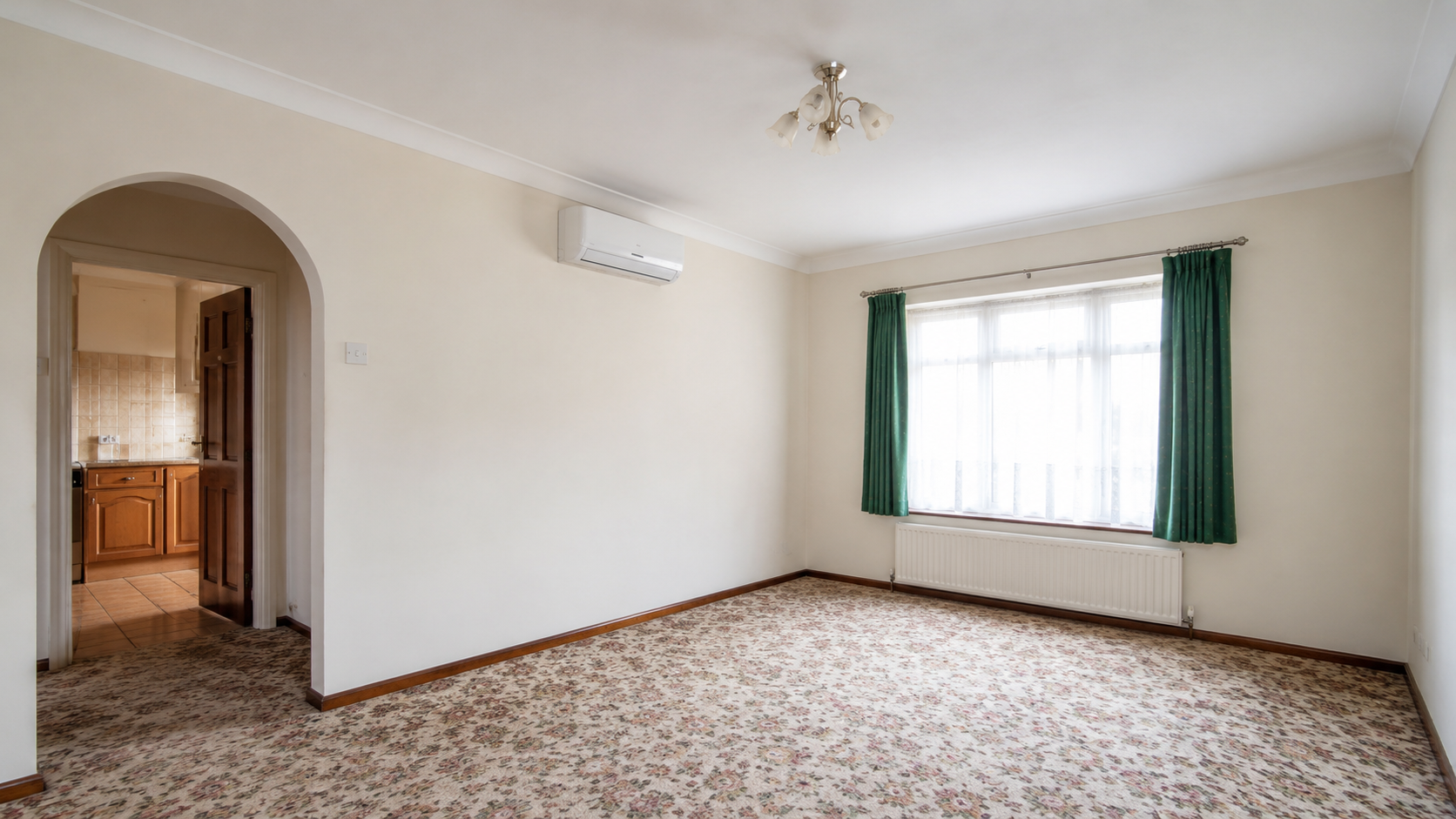

Air conditioning in UK homes is no longer the exception. Hotter summers, working from home, and the availability of systems that both heat and cool efficiently have made domestic AC increasingly common — and increasingly likely to appear as a feature (or a complication) in properties you're buying or renovating.
This guide covers real 2026 installation costs for the main system types, what drives the price, running costs, and what buyers need to check when a property already has air conditioning installed.
Important clarification: Modern air conditioning systems are reverse-cycle — they heat as well as cool. In heating mode, a split system operates as a heat pump, and in many cases is more efficient than electric resistance heaters for individual rooms. This is why AC and heat pumps are related technology, though designed differently and suited to different applications.
Air Conditioning Installation Cost UK 2026
The cost depends primarily on the system type: single-room split, multi-room multi-split, or whole-house ducted. Each serves different needs and has a different cost profile.
| System Type | Coverage | Supply & Install Cost | Best For |
|---|---|---|---|
| Single split system | 1 room | £1,200–£2,500 | Home office, bedroom, living room |
| Multi-split system (2 rooms) | 2 rooms | £2,500–£4,500 | Home office + bedroom combination |
| Multi-split system (3–4 rooms) | 3–4 rooms | £4,500–£8,000 | Whole floor or main living areas |
| Multi-split system (5+ rooms) | 5+ rooms | £7,000–£14,000 | Large properties, multiple floors |
| Ducted system (concealed) | Whole house | £8,000–£20,000+ | New builds, major renovations |
These are supply and installed figures from F-gas registered installers. The spread in each range reflects room sizes, ceiling heights, cable and pipework runs, and whether any making good (plasterwork, decoration) is included.
What Affects the Cost?
Pipework and Cable Runs
Every indoor unit needs refrigerant pipework and electrical cabling running to the outdoor condenser unit. Short, simple runs (exterior wall, condenser directly outside) are straightforward. Long runs through internal walls, across floors, or through a roof space add time and materials — typically £200–£600 per additional metre of complex routing.
Number of Outdoor Units
A multi-split system uses one outdoor condenser serving multiple indoor units. This is tidier than multiple condensers but requires a larger, more expensive outdoor unit. For very large systems or buildings where one location doesn't suit all runs, multiple condensers may be installed — each at £600–£1,500 for the unit alone.
Making Good
Running pipework through walls leaves holes that need filling, and chasing pipe channels into plasterwork leaves marks that need redecorating. This is sometimes included in installer quotes and sometimes not. Always clarify before signing.
Electrical Supply
Each outdoor unit requires a dedicated electrical circuit from the consumer unit. For properties with limited spare capacity or older consumer units, an upgrade may be required — adding £1,000–£2,500 to the project.
Planning Permission and Conservation Areas
Most domestic air conditioning installations are permitted development in England — meaning planning permission is not required. However, there are important exceptions:
- Listed buildings — listed building consent is required for both the indoor units and the outdoor condenser. Installation on a listed building without consent is a criminal offence.
- Conservation areas — condenser units visible from a public highway in a conservation area require planning permission. Many Cotswolds properties fall into this category.
- Flats — permitted development rights are restricted for flats. Planning permission is typically required, and the freeholder's consent is also needed.
- Article 4 directions — some local authorities have removed permitted development rights in specific areas. Check with your local planning authority before proceeding.
For Cotswolds and conservation area properties: always check planning status with the local authority before installation. A condenser unit placed without consent may need to be removed at your cost, and retrospective consent is not guaranteed.
Running Costs
Modern split systems are highly efficient. The key metric is EER (Energy Efficiency Ratio) for cooling and COP (Coefficient of Performance) for heating. A quality system will have an EER of 3.5–5.5, meaning it produces 3.5–5.5 units of cooling for every unit of electricity consumed.
| Room Size | Typical Unit Size | Running Cost (8 hrs/day cooling) | Running Cost (8 hrs/day heating) |
|---|---|---|---|
| Small (up to 20m²) | 2.5kW | £0.60–£1.20/day | £0.40–£0.90/day |
| Medium (20–35m²) | 3.5kW | £0.90–£1.80/day | £0.60–£1.20/day |
| Large (35–55m²) | 5.0kW | £1.20–£2.50/day | £0.80–£1.80/day |
Heating mode is typically cheaper to run than cooling because heat pumps extract heat from outside air rather than generating it — even on cold days, there is usable heat energy in the air down to around -15°C for modern units.
What Buyers Need to Check on a Property with Existing Air Conditioning
An existing AC system can be a genuine asset or a maintenance liability depending on its age, condition, and installation quality. Before you factor it positively into a purchase decision:
Age and Brand
Quality systems from Mitsubishi, Daikin, Fujitsu, and Panasonic last 15–20 years with proper maintenance. Budget brands installed cheaply may need replacement within 8–10 years. Check the installation date and brand. A system over 10 years old with no service history is a risk.
F-Gas Compliance
Air conditioning systems use refrigerant gases (F-gases) that are regulated under UK law. Only F-gas registered engineers can work on these systems. Ask for the F-gas certificate for the installation and any service records. A system worked on by an unregistered engineer has no legally valid service history.
Planning Compliance
If the property is in a conservation area or is a listed building, check that the installation had the necessary consents. If it didn't, you inherit the problem — including potential enforcement action and the cost of removal.
Condition of Indoor Units and Filters
Dirty or neglected indoor units circulate poor quality air and reduce efficiency significantly. Filters should be cleaned every 3–6 months. A system with visibly dirty units and no service records will need a full service before use — typically £100–£200 per unit.
Outdoor Condenser Condition
Inspect the outdoor condenser for damage, corrosion, or blockage. Condensers installed in exposed locations — particularly coastal or near agricultural land — deteriorate faster. Replacement condenser units typically cost £600–£2,000 depending on system size.
Buying a property with air conditioning — or planning to install it? A NOROS pre-purchase assessment covers the full cost picture before you commit.
Get a NOROS Assessment — from £99Air Conditioning in Period and Rural Properties
For period properties in the Cotswolds and across Gloucestershire, Oxfordshire, and Wiltshire, air conditioning installation requires careful planning. The challenges are:
- Thick stone walls — drilling through solid stone walls for pipework is possible but slower and more expensive than through brick or timber frame.
- Conservation area restrictions — condenser units visible from a public highway require planning permission in most Cotswolds conservation areas.
- Listed building consent — for listed buildings, consent is required and may be refused where the installation affects the character of the building.
- Aesthetic integration — in high-value period properties, concealed indoor units (ceiling cassette or ducted) are preferred over wall-mounted units, but cost significantly more.
For a Victorian terrace or period cottage, a single split system in the main bedroom or home office is often the most practical and cost-effective approach — avoiding planning complications while delivering meaningful comfort improvement.
Frequently Asked Questions
How much does air conditioning cost to install in the UK in 2026?
A single-room split system costs £1,200–£2,500 supply and installed. A multi-split system for 2–4 rooms costs £3,500–£8,000. Ducted whole-house systems cost £8,000–£20,000+.
Does air conditioning both heat and cool?
Yes. Modern split systems are reverse-cycle — they cool in summer and heat in winter, typically more efficiently than electric resistance heaters for individual rooms.
Do you need planning permission for air conditioning in the UK?
Most installations are permitted development, but conservation areas, listed buildings, and flats require planning permission or listed building consent. Always check before installing.
How much does it cost to run air conditioning in the UK?
A typical single-room system running 8 hours a day in cooling mode costs £0.60–£2.50 per day depending on room size and unit efficiency.
What should buyers check when purchasing a property with air conditioning?
Age, brand, F-gas compliance, planning consent (especially in conservation areas), service history, and condition of both indoor units and outdoor condensers.