
Heat pumps are increasingly common in the UK property market — whether you're planning to install one, buying a property that already has one, or trying to understand whether a property you're considering is suitable. The costs are significant, the variables are many, and the figures quoted in the press are rarely the full picture.
This guide covers real 2026 installation costs, the Boiler Upgrade Scheme grant, what affects suitability, and — critically — what buyers need to verify before relying on an existing heat pump installation.
Heat Pump Installation Cost UK 2026
There are two main types of heat pump for domestic use: air source and ground source. Air source units extract heat from outside air; ground source systems draw heat from the ground via buried loops or boreholes. Both deliver heat at lower temperatures than a gas boiler, which has significant implications for how the heating system in the property is designed.
| System Type | Typical Output | Gross Cost | After £7,500 BUS Grant |
|---|---|---|---|
| Air source heat pump (ASHP) | 8–12kW | £8,000–£15,000 | £500–£7,500 |
| Air source heat pump (ASHP) | 14–18kW | £12,000–£20,000 | £4,500–£12,500 |
| Ground source heat pump (GSHP) — horizontal loops | 8–16kW | £20,000–£28,000 | £12,500–£20,500 |
| Ground source heat pump (GSHP) — borehole | 8–16kW | £25,000–£40,000 | £17,500–£32,500 |
The Boiler Upgrade Scheme (BUS) provides a £7,500 grant toward the cost of an air source or ground source heat pump. The grant is applied directly by the MCS-accredited installer — you don't claim it separately. It cannot be stacked with other government grants for the same installation.
These figures cover the heat pump unit, installation, new pipework, controls, and commissioning. They do not include associated works that are often essential — see the section on hidden costs below.
Is My Property Suitable for a Heat Pump?
This is the question that matters most — and the one most often glossed over. A heat pump installed in an unsuitable property will be expensive to run, uncomfortable to live in, and potentially damaging to both the property and the equipment. The key suitability factors are:
Insulation
Heat pumps deliver heat at lower flow temperatures than gas boilers (typically 35–50°C vs. 70–80°C for a boiler). In a poorly insulated property, this lower temperature heat output cannot keep pace with heat loss. Before a heat pump makes sense, the property usually needs loft insulation to current standards, cavity wall insulation (if applicable), and in the case of solid-wall properties, either internal or external wall insulation. This can add £5,000–£25,000+ to the project cost.
Radiator Sizing
Existing radiators sized for high-temperature boiler output are typically too small for a heat pump running at lower temperatures. Upgrading to larger radiators or installing underfloor heating throughout is often required. Radiator upgrades typically cost £150–£400 per radiator; whole-house underfloor heating retrofit costs £5,000–£15,000+.
Hot Water Cylinder
Most heat pumps require a hot water cylinder (typically 200–300 litres). Properties with combination boilers have no cylinder, so one must be installed — typically £800–£1,500 for the cylinder plus installation. This requires space that some properties don't have.
Outdoor Space for the Unit
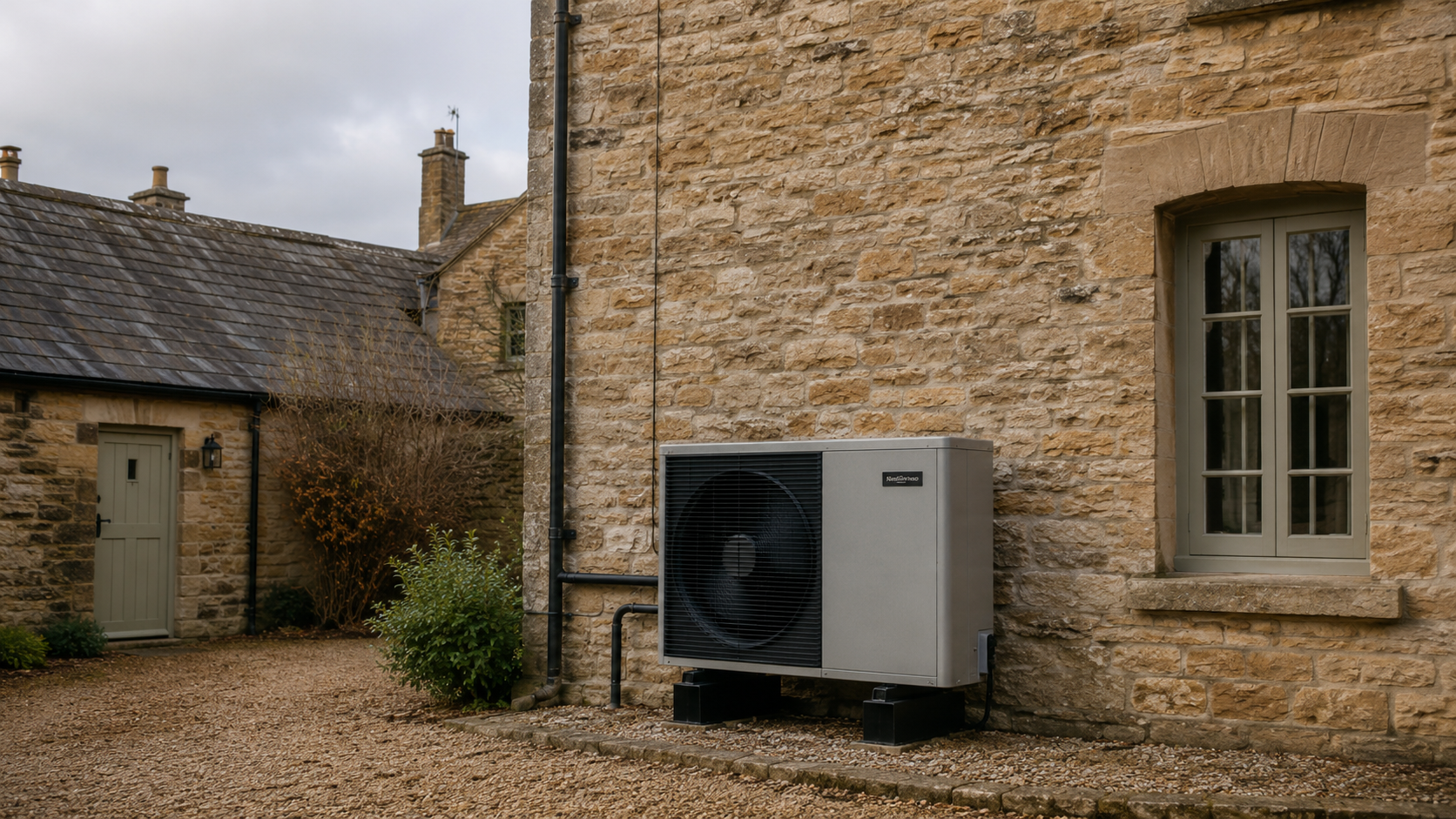
An air source heat pump requires an outdoor unit roughly the size of a large air conditioning unit, typically wall-mounted or on a ground base within a few metres of the property. Properties with no accessible external space, or with planning restrictions on external alterations, may not be suitable.
Hidden Costs Buyers Often Miss
The grant-adjusted headline figure for an ASHP can look attractive. What buyers and homeowners often don't account for:
| Associated Work | When Required | Typical Cost |
|---|---|---|
| Loft insulation upgrade | Most pre-2000 properties | £300–£800 |
| Cavity wall insulation | Uninsulated cavity walls | £1,500–£3,500 |
| Solid wall insulation (internal) | Solid wall properties | £8,000–£18,000 |
| Radiator upgrades (per radiator) | Most installations | £150–£400 |
| Hot water cylinder | Combi boiler properties | £800–£1,500 |
| Electrical consumer unit upgrade | Pre-2000 properties | £1,000–£2,500 |
| Underfloor heating retrofit | Where radiators cannot be upsized | £5,000–£15,000 |
For an older, solid-walled property in Gloucestershire or Oxfordshire, the total project cost to make a heat pump work properly — including the unit, insulation works, and heating system upgrades — can easily reach £30,000–£50,000. This is not a scare figure; it is the realistic total for doing it correctly.
Considering a property that has or needs a heat pump? A NOROS pre-purchase assessment covers the full picture — heat pump, insulation requirements, heating system, and all associated costs.
Get a NOROS Assessment — from £99What Buyers Need to Check on a Property with an Existing Heat Pump
If a property you're considering already has a heat pump, don't assume it's working well or installed correctly. A poorly specified or maintained system can be as much a liability as a selling point.
MCS Certificate
The installation must have been carried out by an MCS-accredited installer. Without this, the Boiler Upgrade Scheme grant cannot have been legitimately claimed, and some warranties are void. Ask for the MCS certificate and cross-check the installer.
System Performance Data
A well-functioning heat pump should have a Coefficient of Performance (CoP) of at least 3.0 — meaning it produces 3 units of heat for every 1 unit of electricity consumed. Modern systems log this data. Ask the vendor for recent performance data. A system running at CoP below 2.5 is underperforming and should be investigated.
Service History
Heat pumps require annual servicing to maintain efficiency and warranty. Ask for service records. A system that has never been serviced since installation is a risk.
Age and Condition of Associated Works
Check whether the insulation upgrades and heating system modifications were done at the same time as the heat pump. A heat pump bolted onto an unchanged old system is a common mistake and often results in poor performance and high running costs.
Heat Pumps and Period Properties
Period properties — the majority of Cotswolds housing stock — present particular challenges for heat pumps. Solid stone walls have poor insulation values by modern standards, and many cannot accept cavity fill. Internal wall insulation reduces room sizes and requires full redecoration. External wall insulation on a Cotswold stone property would almost certainly be refused planning permission.
For listed buildings, heat pump installation requires listed building consent. The external unit must not harm the character of the building or its setting. Approval is possible but requires a carefully designed scheme and a supportive conservation officer.
A cottage renovation budget should include a realistic assessment of whether a heat pump is viable, or whether a high-efficiency condensing boiler remains the more practical and cost-effective solution for that particular property.
Frequently Asked Questions
How much does a heat pump cost to install in the UK in 2026?
An air source heat pump costs £8,000–£15,000 gross, reduced to £500–£7,500 after the £7,500 Boiler Upgrade Scheme grant. Ground source systems cost £20,000–£40,000 before the grant.
Is my house suitable for a heat pump?
The key factors are insulation standard, radiator sizing, hot water cylinder provision, and outdoor space for the unit. Many older UK properties need significant associated works before a heat pump performs efficiently.
What is the Boiler Upgrade Scheme?
A £7,500 government grant toward the cost of an MCS-accredited heat pump installation. Applied directly by the installer at point of sale.
Can you install a heat pump in a listed building?
Yes, with listed building consent, but approval depends on the conservation officer and the specific proposal. Ground source systems are generally less visually intrusive than air source.
How much does it cost to run a heat pump?
A well-installed system in a suitable property typically costs 30–50% less to run than a gas boiler at current energy prices, but this depends heavily on the property's insulation standard and the system's CoP.